Fort Madhogarh, located 50 km east of Jaipur, was built to provide early warning to the Rajputs of approaching armies from the east. In 1787 the Maratha Empire attacked with 35,000 men. The Rajputs mustered 30,000 men to defend against the siege, known as the Battle of Laisot. Today, the fort operates as a hotel. We were fortunate to spend a night and meet the King himself.
Ranthambore Safari
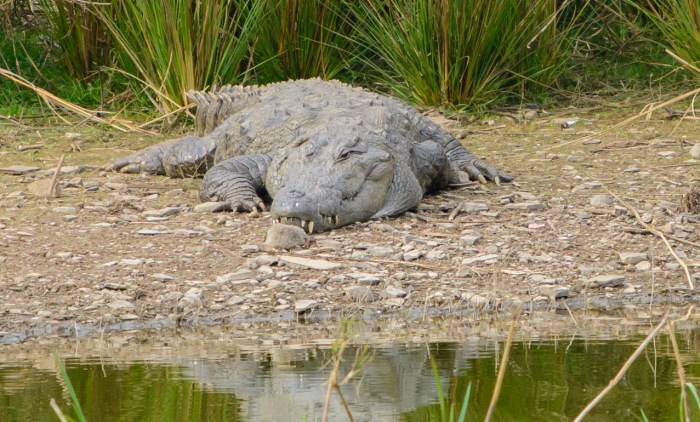
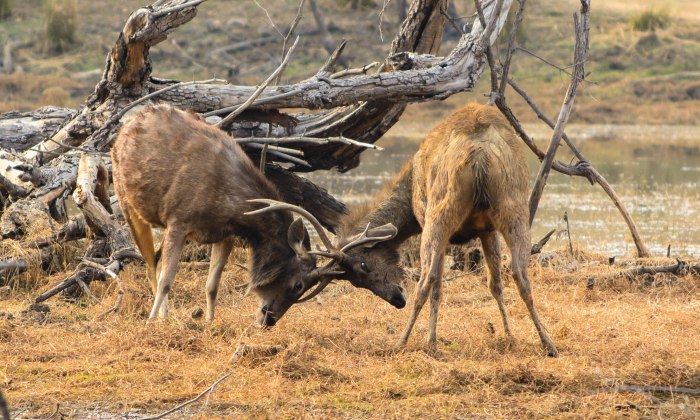
Some pictures from our safari in Ranthambore National Park. We only had about 2 hours in the park but we were lucky enough to see some incredible wildlife in that short time.



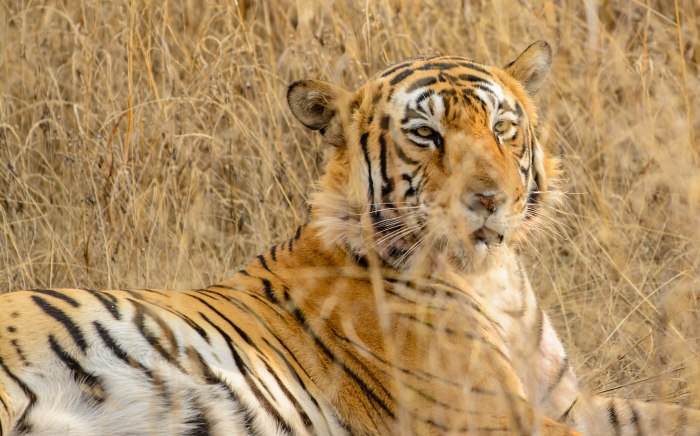
After about an hour in the park scanning for tigers our driver stopped to speak to the driver of another safari vehicle. Following a short conversation in Hindi our driver and guide exchanged a knowing glance and soon we were racing along the dusty road. A tiger had been spotted resting in the park. We approached the location and waited for a minute or two as another safari truck pulled away from the spot the tiger was located. We moved up to have a look. The tiger was massive our guide estimated it was over 600lbs!
Word of the tiger had travelled fast and there were soon many vehicles queued up to see it. In the end, we only had about a minute with the tiger in view before we had to give up our spot, but it was pretty special to see such a powerful animal up close.

Himachal Pradesh: Beautiful yet Terrifying
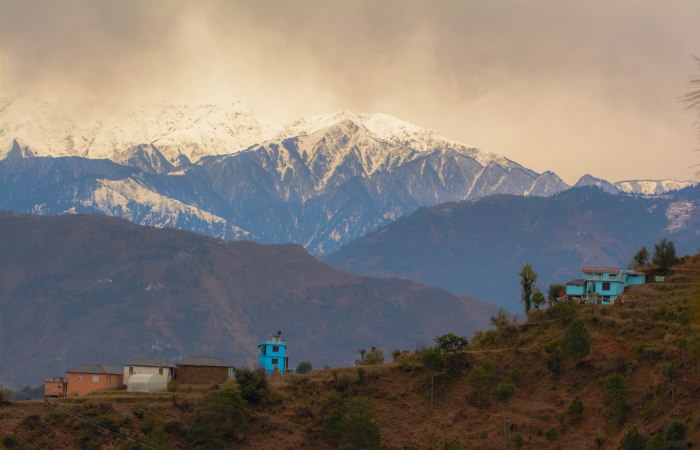
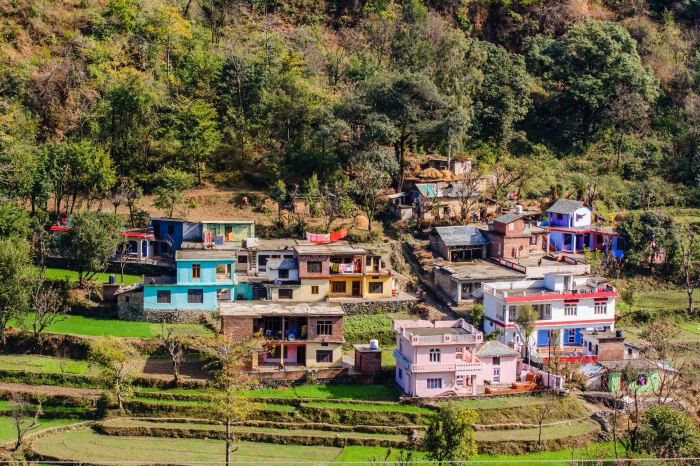
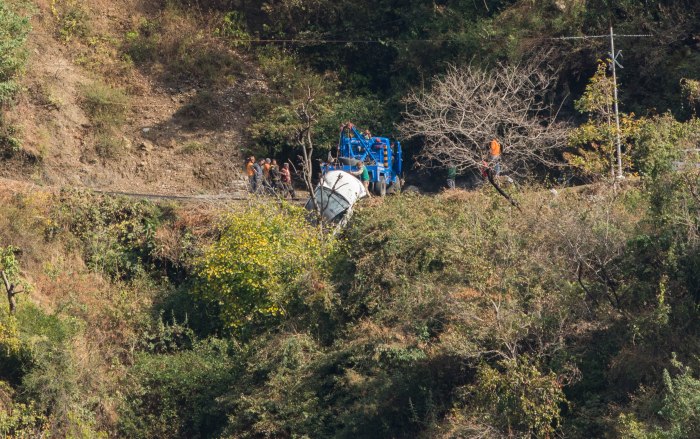
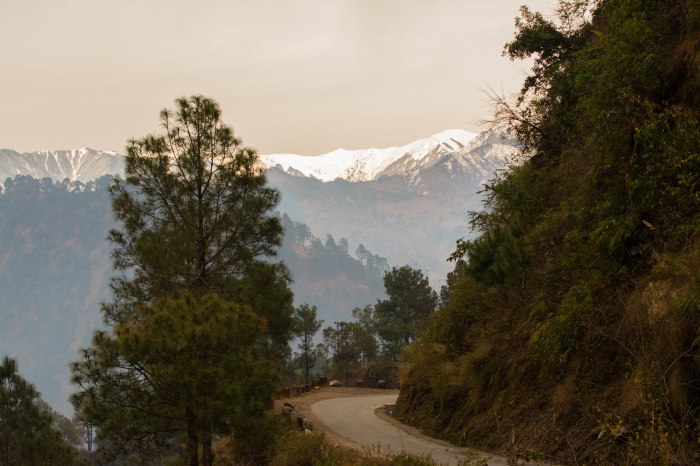
The next leg of our journey took us into the northern province of Himachal Pradesh. Here, crowded streets gave way to winding mountain roads on which Kanwar’s uncle Titu drove with the skill and precision of an F1 driver. Gripping corners in a way I didn’t think were possible in a Toyota minivan. We ascended into the mountains as the towns grew smaller and smaller. Eventually turning into a scattering of brightly coloured houses located intermittently throughout the ridges and valleys of the Himalayas.
On our way we stopped to visit the Chamera hydroelectric dam, which was built with the help of Canadians.

We spent the night in the small mountain town of Dalhousie, an old British fort hence the name. The next morning we set off further into the mountains towards Khajjiar.


Passing through the town of Chamba a larger mountain town nestled along a beautiful river valley.
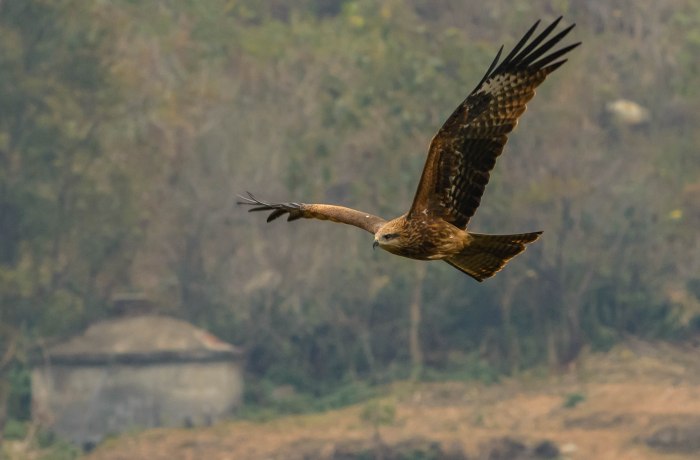
Khajjiar, a popular destination for local tourists, is located on a saddle between two peaks at 2050 m. Activities here include horse back riding and paragliding, we opted for drone flying.
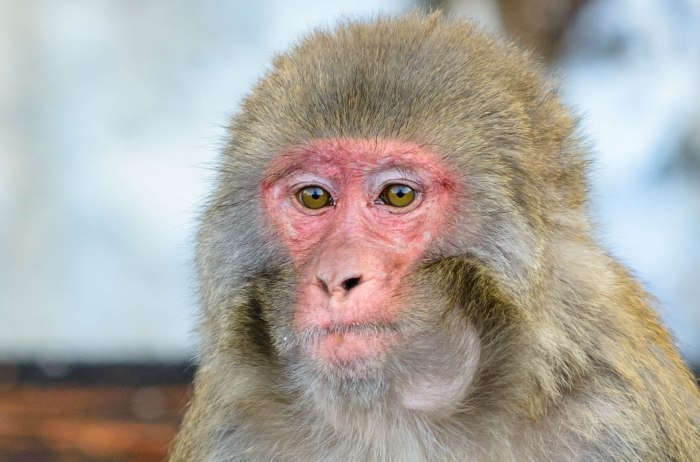
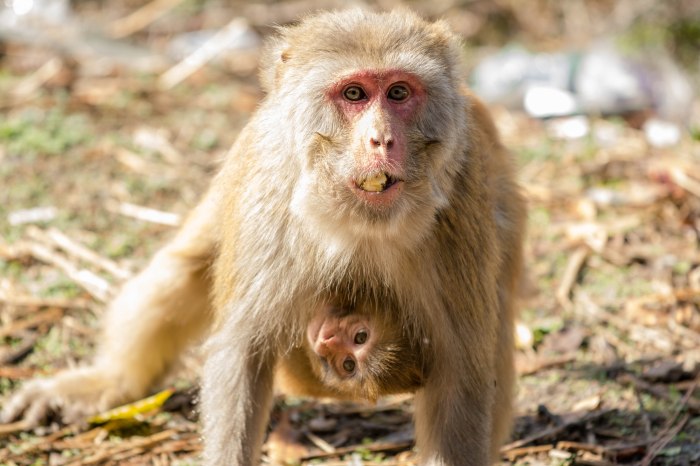
Following Khajjiar, we drove 6 hours to return to Jalandhar. A big kudos to Titu for putting in several consecutive long days behind the wheel and getting everyone safely through the narrow mountain roads.
The Golden Temple
Goodbye Miranpur
Next stop Golden Temple at Amritsar.
Good Samaritans
After shopping in Jalandhar we came back to our car, trapped behind several others and a bus. We decided to play a game of parking lot Tetris and tried to squeeze through a gap several feet narrower than our car. A few bumps and scrapes later we decided to retreat.


But alas, a few good samaritans arrived. In our path was a small burgundy car, ripe for the picking. The good samaritans tried a few random keys from their pockets and were able to unlock the car. Knowing nearly all vehicles in India have a standard gearbox, all we had to do was release the hand brake and roll the vehicle forward. And back of course, the owner unsuspecting.
By: Kanwar and Daniel
Heaven on Earth: A Homage
My paternal grandfather, pictured in the Five W’s post, has 4 sons and 1 daughter. The 4 sons, my father and uncles, immigrated to Canada in the 80’s. Although they worked hard to move to Canada and build a life for themselves and their families their hearts are and will always be in Punjab. A common photo found in all of the 4 sons’ and daughter’s home is of their dad (my grandfather) relaxing on his farm. One of my uncles used to say, it is heaven. My father always longed to return to the Khaeth (Punjabi for Farm).
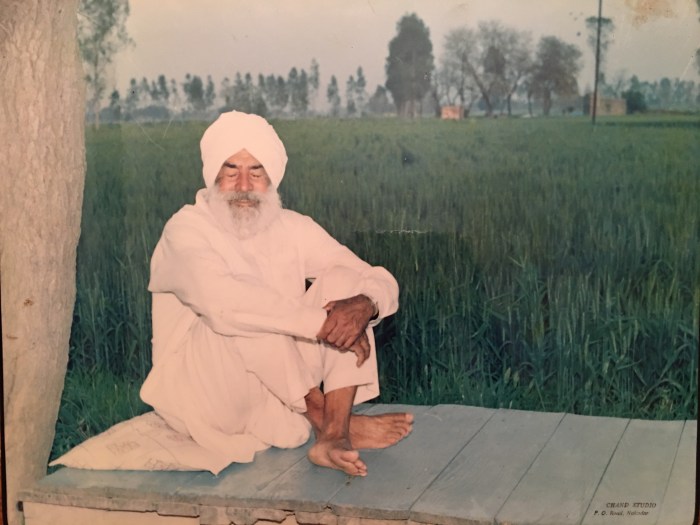
While visiting my father’s house I went to visit the family farm and came across the same wooden bench from 30 some odd years ago. I decided to pay a tribute to my grandfather.
– By: Kanwar Johal
India: An Assault on the Senses
Smell
From the moment the plane landed in New Delhi an aroma of diesel fuel filled the aircraft cabin. To the rural farmlands of Punjab where dung fires, used for cooking, fumigate the countryside with a smell of smoky musky wet grass.
 Professionally hand crafted dung patties.
Taste
So far everything we’ve had to eat in India has been delicious. But there is one underlying theme in everything we’ve had so far. Heat. Everything in India is spicy, even our McMahraja chicken burgers from McDonalds were enough to put beads of sweat on our foreheads. There is a baseline level of heat cooked into every dish that is on par with what North American’s would label hot – suicide. The home cooked meals are a slightly different story. Most meals are vegetarian composed of fresh potatoes, peas and carrots in a delicious stew served with roti. Before coming to India I was told to stay away from dairy, I didn’t listen and am drinking a glass of unpasteurized buffalo milk as I write.
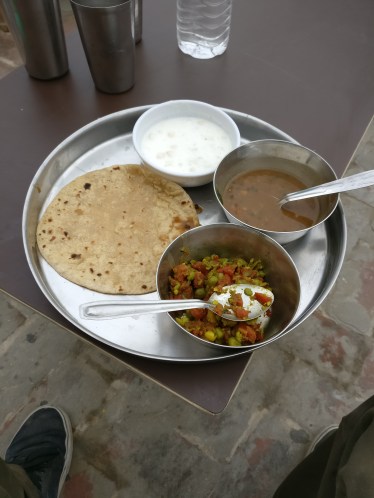
Roti and Dhae with Mutter Gujjer
Hearing
The roads of India are LOUD… all the time. Standard driving rules and courtesies, like using blinkers, are replaced with excessive and drawn out horn blasts. Indians honk when they overtake, approach an intersection, a driveway, exit a driveway, see a dog near the side of the road, the list goes on, in fact it is rare to go longer than 30 seconds without using the horn for something.
A small town in Jalandhar (Wait until you see Delhi)
Touch
When people think of India they imagine hot and humid weather, however the weather is more deceptive than one realizes. Temperatures regularly reach single digits at night time. Canadians reading this may scoff at our claim to misery. However, with no indoor heating and insulation the cold is ever present; the constant fog keeping the warmth of the sun at bay. Taking showers with a bucket with lukewarm water is a luxury.
 Sunset over the Johal Farm.
Sight
Sensory overload. India is a country of over 1.3 billion people, so it comes as no surprise that there are people everywhere. Driving or walking down the street you are bombarded by a frenzy of activity. People cooking and selling food by the road side, someone leading a donkey burdened with burlap sacks, children chasing one another through the streets, a small roadside fire burning garbage. All in the span of 10 meters. Looking around, it is impossible to take in all of the activity going on. The slower pace of life in rural India starkly contrasts this. The visual chaos is replaced with vast expanses of wheat and sugar cane fields, the hordes of people with the odd farmer harvesting crop or a tractor turning a field.
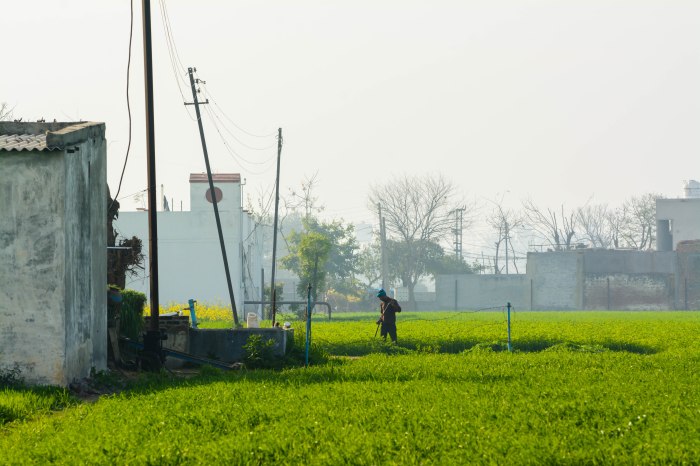 Local farmer in Meerpur, Jalandhar, Punjab.
By: Daniel and Kanwar
Rules of the Road
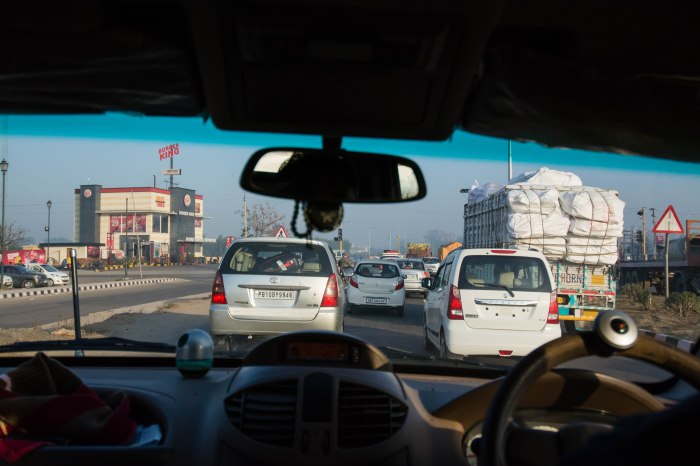
There are none… really, they don’t exist. As a self described somewhat aggressive driver back home I am blown away by the way the roads of India work.

There are painted lines on the road but I’m not sure why. Even when there isn’t a lot of traffic around nobody follows these arbitrary lines on the ground, most cars straddle the center line until a faster car comes up behind them blaring the horn only to then squeeze through the barely-a-car-width gap between that vehicle and the donkey drawn cart along the side of the road. Indian drivers are incredibly aggressive, for country that seems so laid back, their driving antics tell a different story. When volume is heavy a two-lane road becomes three lanes of honking cars, rickshaws and motorcycles jostling to get ahead of one another, plus a bicycle or two riding along seemingly oblivious to the chaos around them. If you want a cheap thrill and want to be reminded that you are alive, try crossing the road. Blinkers and side view mirrors are never used; you live and die by the horn.
– By: Daniel Camilleri
Prologue – The Five “W’s”.
Last year, in early February, my father passed away from complications due to pneumonia at the age of 56. In preparation for the funeral my sisters and I were tasked to go through and gather old photos for a slideshow. Many of which I had already seen countless times, many that could be categorized as “family posing forcefully at birthday party”. A staged photograph only tells you who was present and the whereabouts; a candid photograph tells you a story. That is why I am here, to tell you a story.
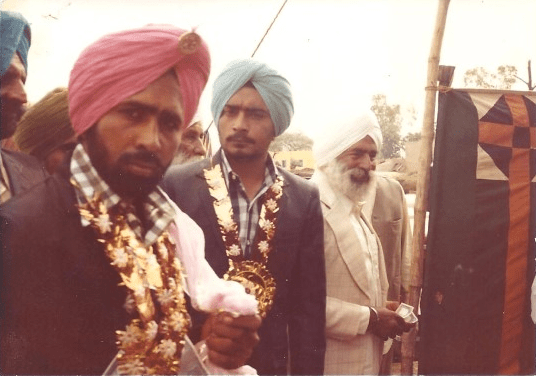
Uncle (Left), Father (Middle), Grandfather (Right)
This picture struck me rather hard. It showed my father, my uncle and grandfather with real emotion. It is from my uncle’s wedding, my uncle looks upset. Because he is. His wife tells me he was having a bad beard day. My grandfather showing genuine excitement for his son’s wedding. This is when I realized my father had lived as rich of a life, been on adventures, gathered as many stories as I have, all before I was born. There was so much I didn’t know about his roots in India. This is when I realized my father was a boy much like myself and not simply a parent who was there to provide care. I wanted to know more.
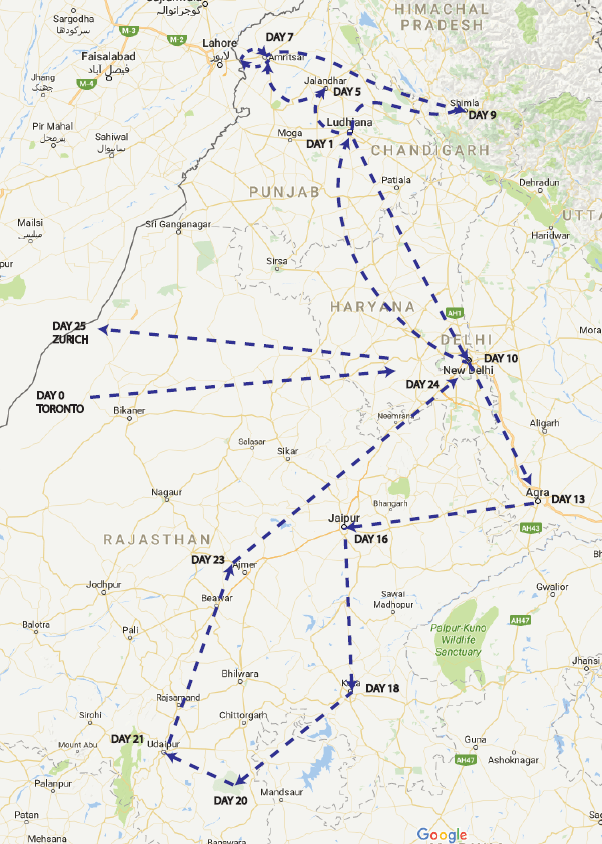
This summer, plans began to materialize for a trip to India to spread my father’s ashes in his motherland, Punjab. So, January 17th 2017, I pack my bags and head off to India for 25 days with my family, and friend Daniel. The first 10 days of the trip will be spent in a northern state called Punjab. Afterwards, Daniel and I are going to venture out on our own and travel for 15 days through the state of Rajasthan. We will be taking photos, filming, writing so we can share our story. Stay tuned.
– By: Kanwar Johal
 Gotta Be KD